The EU Social Media Ban Debate Needs an Age-Assurance Baseline, Not One Forced App
Europe is moving fast on child online safety, but forcing one prototype or one app model too early risks fragmentation, lock-in, and weaker privacy.


Key Takeaways
- The goal is clear: protect minors online faster and more consistently.
- The architecture is not clear: Europe still lacks a settled, harmonised end-state for age assurance.
- Fragmented national responses raise cost for platforms and weaken consistency for citizens.
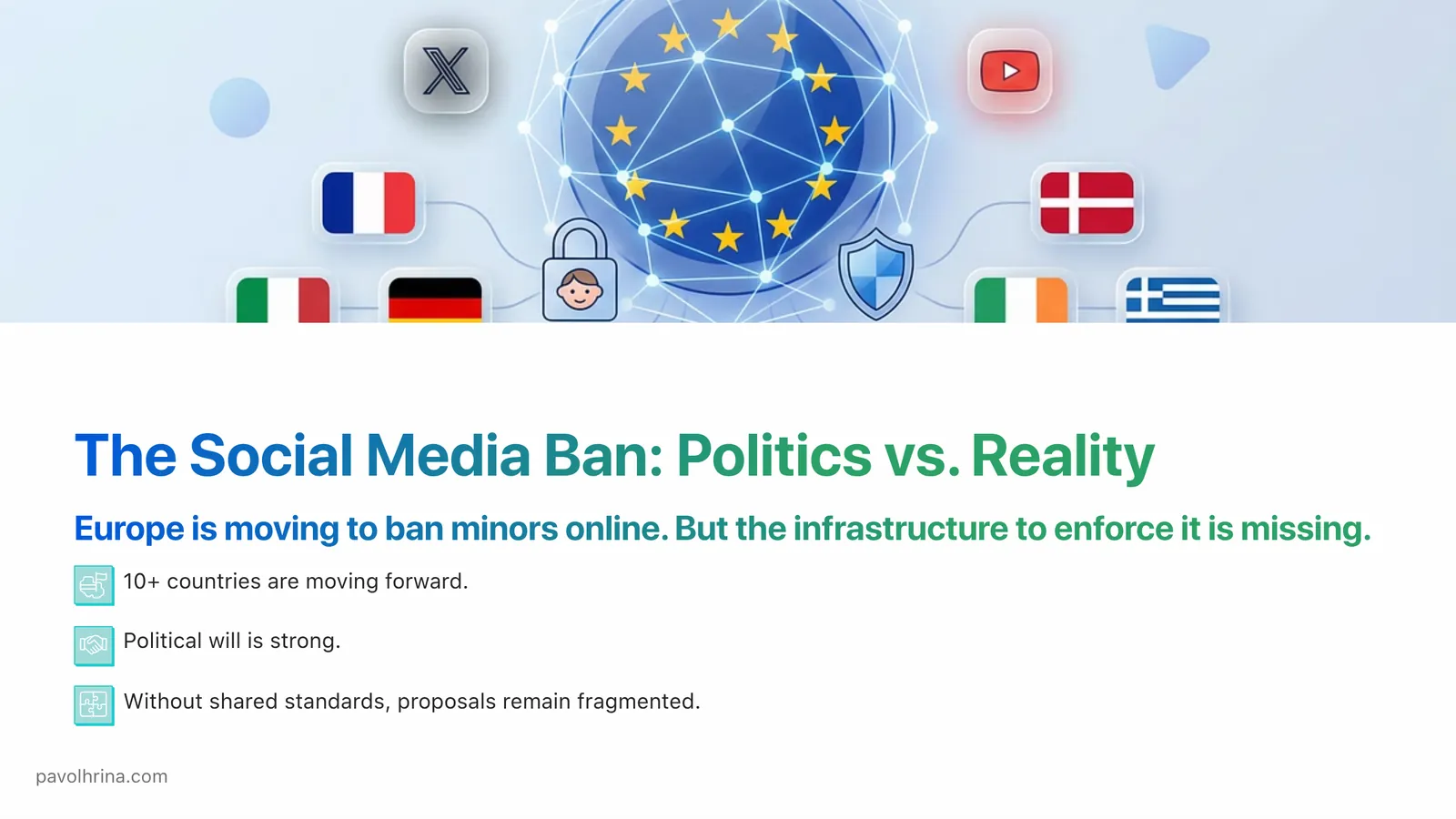
The Social Media Ban Debate Starts With the Wrong Shortcut
Download slidePolitical pressure around child online safety is rising across Europe, but implementation readiness is still uneven. The real gap is not intent. It is the lack of a shared age-assurance baseline that platforms, governments, and providers can all rely on.
Next Actions
- Convert the strongest point into an internal briefing note.
- Choose one use case to pressure-test in the next two weeks.
- Align commercial and technical owners on the implication for delivery.
Strategy Call
Want to turn this into a practical next step?
Whether you're shaping identity strategy, wallet adoption, or product direction - let's discuss what makes sense.
Prefer LinkedIn? Message me there .
Related Insights

Wallet Requester Trust Should Not Depend on the User Catching the Problem
Small design choices around requester registration, machine-readable intent, and default enforcement determine whether the wallet actually protects users or simply warns them after the fact. If too much depends on the user noticing misuse in real time, the protection model is still too weak.
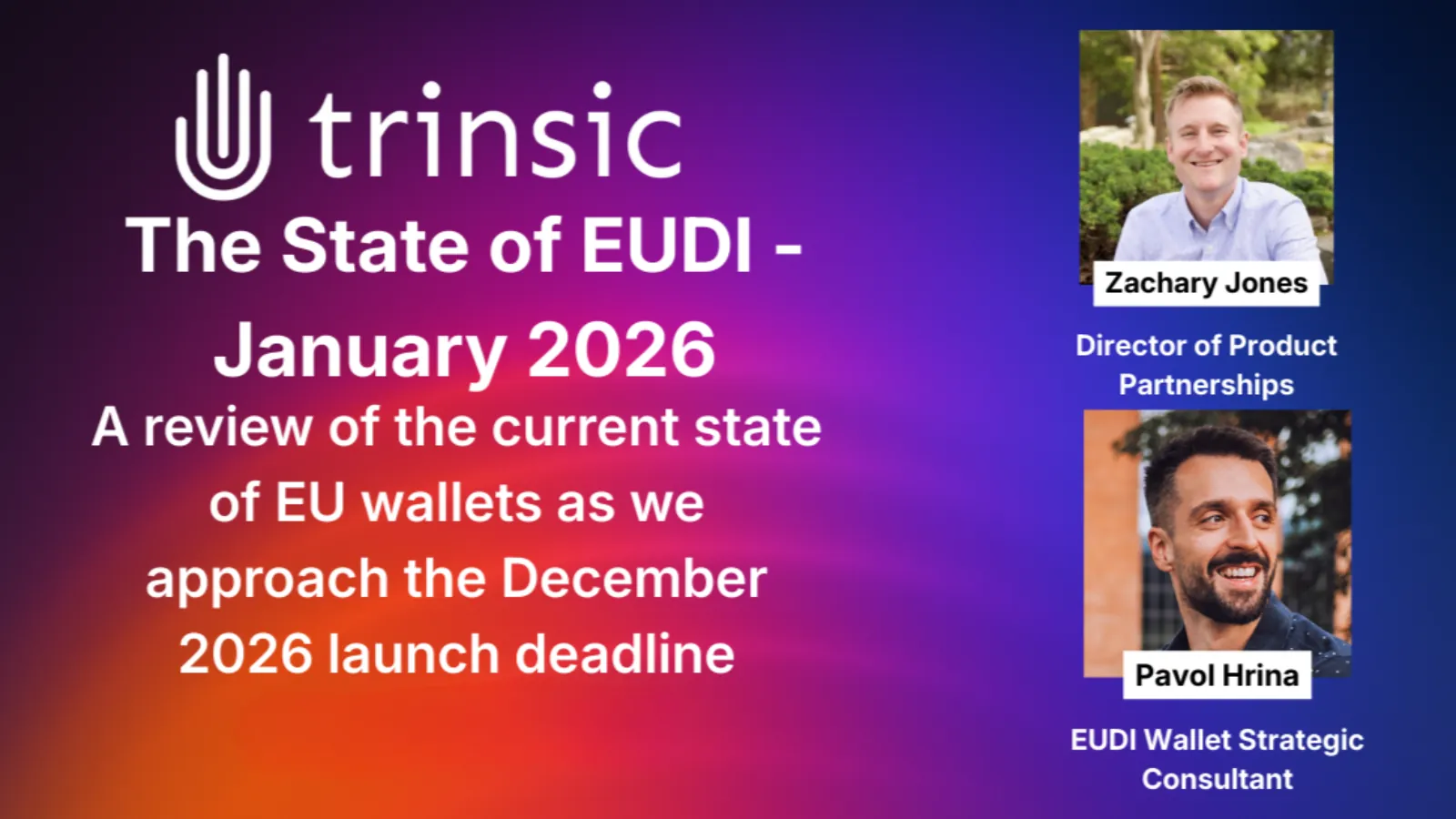
The State of the EU Digital Identity Wallet in Early 2026
A practical webinar recap on where the EUDI Wallet stands as national implementation moves from regulation and pilots into certification, relying party readiness, and adoption planning.

Approval Moments Are Part of EUDI Wallet Readiness
Approval is where wallet trust becomes real. The same credential request can feel clear, confusing, or risky depending on context, handoff, and fallback. Teams preparing for wallet-based data sharing should design approval as part of the whole journey, not as one consent screen.