The Digital Credentials API Solves a UX Problem and Reopens a Sovereignty Question
Native credential issuance could remove one of the biggest adoption bottlenecks in digital identity: getting verified data into wallets without fragmented issuer-specific flows.
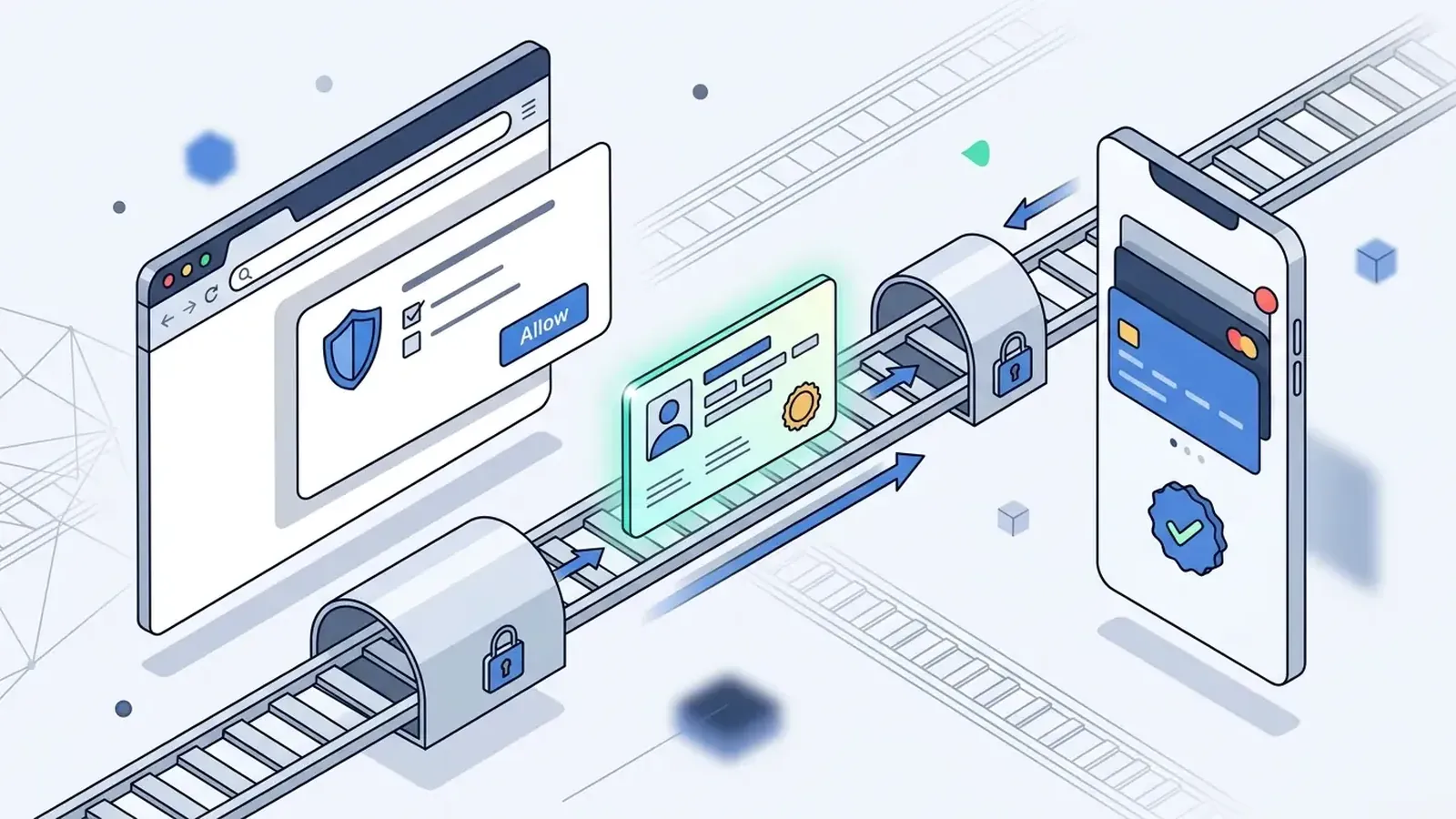

Key Takeaways
- Native issuance can reduce one of the biggest friction points in wallet adoption: the last mile between issuer and wallet.
- A common issuance flow is better for users and much better for issuers than a fragmented wallet-by-wallet handoff model.
- Transparent origin and mediated browser flows can improve trust and usability together.
The Digital Credentials API matters because it attacks a real adoption problem. Wallets do not become useful just because they exist. They become useful when verified data gets into them without clumsy downloads, fragmented issuer flows, and handoff confusion. That is the upside. The harder part is what infrastructure that convenience depends on.
Executive Summary
- Native issuance can reduce one of the biggest friction points in wallet adoption: the last mile between issuer and wallet.
- A common issuance flow is better for users and much better for issuers than a fragmented wallet-by-wallet handoff model.
- Transparent origin and mediated browser flows can improve trust and usability together.
- The trade-off is strategic, not cosmetic: easier issuance through dominant browser rails raises a real sovereignty and dependency question.
What This Is About
Empty wallets are one of the quietest reasons adoption stalls. The problem is not only storage. It is issuance UX.
If getting a credential into a wallet feels fragmented or confusing, several things break at once:
- users lose confidence
- issuers face unnecessary complexity
- wallet adoption stays thin because the first useful data arrives too slowly
That is why native issuance is such an important topic. It can solve real friction. It also forces a harder question about who controls the rails that make the smooth experience possible.
The Last Mile Still Slows Adoption
One of the best ways to describe the opportunity is simple: feed the wallets.
That means making credential receipt feel native enough that users do not have to think about file downloads, wallet-specific import paths, or awkward browser handoffs. The smoother the last mile becomes, the easier it is for users to understand what is happening and accept the result with confidence.
That matters because even strong wallet concepts stay weak if the first usable credential is hard to receive.
The 50 Button Problem Is Bigger Than It Sounds
Fragmented issuance is not only ugly. It is expensive.
If issuers need separate proprietary flows for many different wallets, the market pays the price in several ways:
- issuers face higher implementation cost
- users meet inconsistent flows
- wallet choice becomes harder to support cleanly
- adoption slows for reasons that feel small but compound fast
One standard issuance path is attractive because it removes that fragmentation. It gives issuers a cleaner route and gives users a more understandable interaction.
Better UX and Better Trust Can Move Together
Native issuance is not only about polish. It can improve trust as well.
The stronger design signals here are:
- clearer origin, so the user can see who is issuing the credential
- a more familiar prompt model
- a mediated handoff that reduces manual friction
That is important because good issuance UX is also explanatory UX. It helps the user understand what is being issued, by whom, and where it is going.
The Sovereignty Question Does Not Disappear
This is where the topic gets harder.
If dominant browsers become the primary issuance rail, the market gains convenience and scale. It may also gain a new dependency.
That raises several real concerns:
- how much control large browser platforms gain over the practical flow
- what metadata or behavioural visibility still matters even if credential contents stay hidden
- whether open standards are enough to prevent lock-in when the UX entry point is still dominated by a few players
That is not an anti-UX argument. It is a reminder that infrastructure choices still have governance consequences.
Better UX May Still Be the Price of Mainstream Reach
There is no easy way around the trade-off.
If digital identity wants mainstream reach, it has to meet users inside the rails they already use. If sovereignty is treated as absolute separation from those rails, the alternative may be a system that is more independent and less usable.
That is the real tension. Not “good UX versus bad politics,” but “how much dependency are we willing to accept in exchange for mainstream adoption, and what protections make that dependency tolerable?”
Why This Matters
Wallet adoption depends on issuance UX becoming a real scaling factor, not a secondary concern. If receiving and presenting credentials feels fragile, the governance model underneath will not get much credit from users or relying parties.
The market also tends to celebrate cleaner UX before it fully absorbs the governance implications underneath it. In digital identity, that is too shallow a reading. Convenience and control have to be considered together.
This connects directly with Driving EUDI Wallet Adoption Means Building for Repeated Use, which focuses on what makes wallets useful, and Top 5 Identity Lessons from 20 Episodes, which highlights why native, trustworthy user flows matter so much for adoption.
Recommended Next Actions
- Treat issuance UX as an adoption layer, not as a secondary technical detail.
- Quantify how much fragmentation the current issuer-to-wallet handoff model creates.
- Preserve transparent origin and user choice as non-negotiable design principles.
- Ask the sovereignty question early, before dominant distribution rails become too embedded to challenge.
- Evaluate open standards not only by elegance, but by whether they meaningfully reduce lock-in in practice.
- Design for mainstream reach without pretending dependency risks are imaginary.
Sources
- Short-post source set on native credential issuance, browser-mediated flows, and wallet adoption
- Comment-thread arguments on sovereignty, metadata concerns, and open standards around the Digital Credentials API
Next Actions
- Validate whether this insight changes your current roadmap assumptions.
- Identify one dependency to verify with product, legal, or architecture this week.
- Turn one takeaway into a concrete implementation decision.
Strategy Call
Want to turn this into a practical next step?
Whether you're shaping identity strategy, wallet adoption, or product direction - let's discuss what makes sense.
Prefer LinkedIn? Message me there .
Related Insights
Driving EUDI Wallet Adoption Means Building for Repeated Use
The strongest digital identity systems did not win because they existed. They won because they solved a useful first job, expanded into more services, and kept lowering friction over time. The same lesson applies to EUDI Wallet adoption.

Top 5 Identity Lessons from 20 Episodes
Standards alone do not create adoption. Trust, consumer-grade UX, high-frequency credentials, stronger remote onboarding, and realistic multi-network rollout do. These five lessons pull the identity conversation back to what actually changes usage.

Wallet Requester Trust Should Not Depend on the User Catching the Problem
Small design choices around requester registration, machine-readable intent, and default enforcement determine whether the wallet actually protects users or simply warns them after the fact. If too much depends on the user noticing misuse in real time, the protection model is still too weak.