
Key Takeaways
- Adoption grows when a digital identity product solves a strong first job and then expands into more services.
- Systems such as BankID, Estonia's digital identity stack, LA Wallet, myColorado, and Singpass all show the power of repeated utility.
- A wallet that mainly stores documents stays weak unless it shortens real journeys around authentication, proof sharing, signing, onboarding, or service access.
The strongest lesson from proven digital identity systems is simple: they did not scale because someone declared them important. They scaled because they became useful often enough that people kept coming back.
Executive Summary
- Adoption grows when a digital identity product solves a strong first job and then expands into more services.
- Systems such as BankID, Estonia’s digital identity stack, LA Wallet, myColorado, and Singpass all show the power of repeated utility.
- A wallet that mainly stores documents stays weak unless it shortens real journeys around authentication, proof sharing, signing, onboarding, or service access.
- EUDI adoption will depend on service density, private-sector participation, low-friction onboarding, and clear business value for acceptance.
What This Is About
EUDI adoption is often discussed as a policy programme, a wallet rollout, or a compliance milestone. The better lens is product behaviour.
Across the better-known identity systems, one pattern keeps repeating. A useful entry point gets people in. Broader service coverage keeps them there. Over time, the identity product stops feeling like a special tool and starts feeling like normal infrastructure.
That is the lesson worth carrying into EUDI. Adoption is not the moment the wallet becomes available. Adoption is what happens when repeated use becomes rational.
Repeated Utility Creates Habit
The comparative examples all reinforce the same idea. A digital identity product becomes strong when it fits into recurring behaviour.
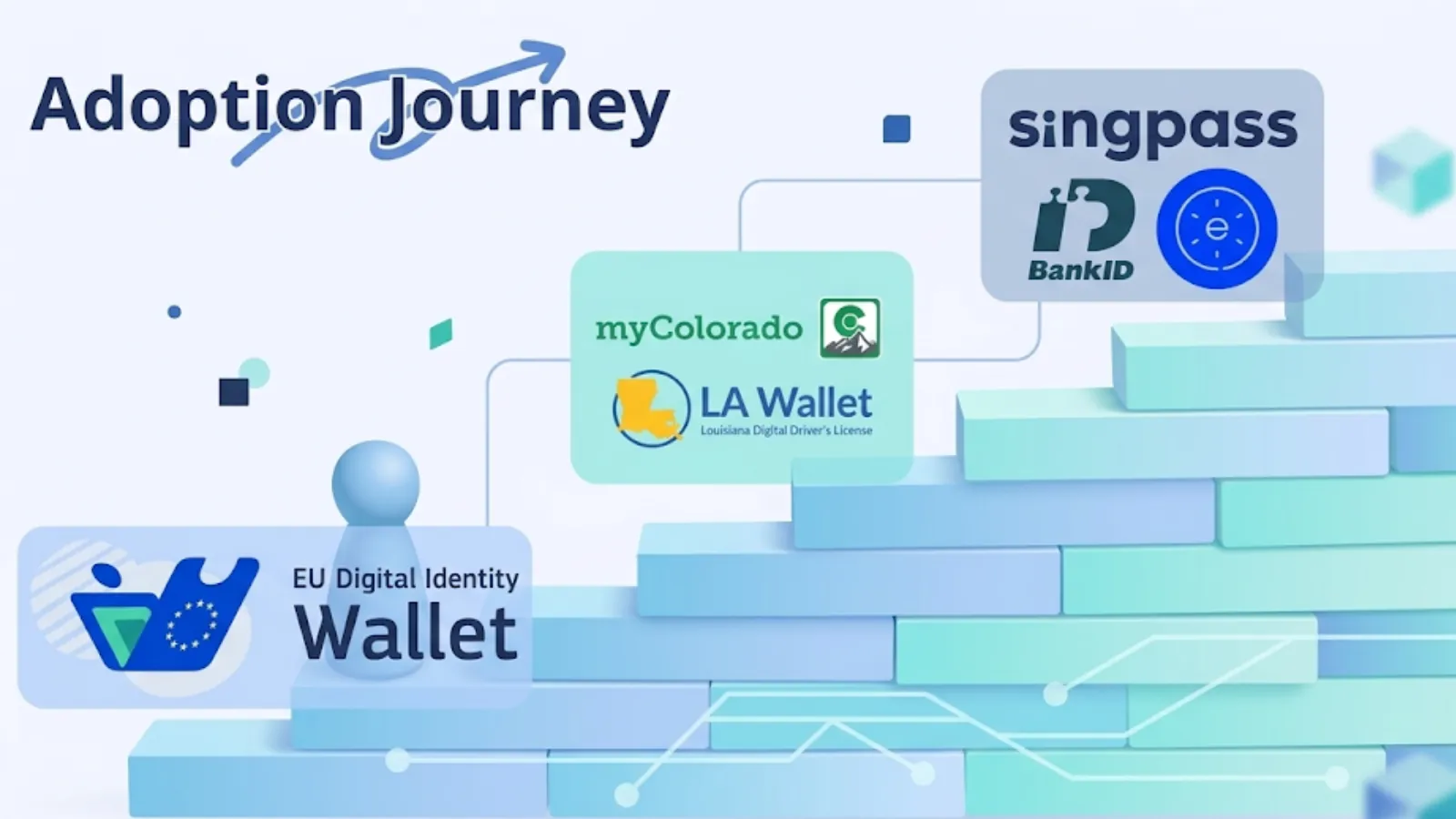
BankID grew into a daily digital habit through banking and service access. Estonia’s digital identity stack became normal because it connected to signatures, public services, health, tax, banking, and more. Singpass moved far beyond a government login because it expanded into a broad service layer across public and private use.
That is what habit looks like in this market. Not symbolic availability. Repeated usefulness.
A Strong First Job Matters More Than a Long Feature List
The first job does not need to cover the whole ecosystem. It does need to matter.
The strongest starting points in the reference systems were not abstract. They solved something people already needed:
- banking and high-trust service access
- tax and government interactions
- proof of identity in regulated or high-friction moments
- document and signature flows
That is why the first use case matters so much for EUDI. It sets the logic for everything that follows. If the first job feels marginal, the wallet starts weak. If the first job feels useful, expansion becomes easier.
Service Density Beats Container Thinking
A wallet that only stores a digital version of a document is easy to understand and hard to love.
The systems people actually use kept expanding the service layer around the identity capability. They connected identity to transactions, not just storage. Authentication, signing, onboarding, proof sharing, renewals, age checks, and service access all matter because they turn identity into something actionable.
That is why document count is a poor success metric on its own. The better metric is how many real tasks become shorter, safer, or easier because the wallet exists.
Private-Sector Participation Expands the Usage Surface
Government services matter for legitimacy. Private-sector use often matters more for repetition.
That is one of the clearest patterns in the proven models. When identity products stay narrow and public-sector-only, usage tends to stay narrow too. When businesses integrate them into banking, onboarding, age-restricted commerce, travel, or other frequent flows, the usage surface becomes much larger.
For EUDI, that means private-sector acceptance should not sit in the “later” bucket. It is part of the adoption engine.
Onboarding and Integration Decide Whether Growth Compounds
Adoption is not only about the value of the finished journey. It is also about how hard it is to get there.
If onboarding feels heavier than today’s alternative, people stay where they are. If relying-party integration feels expensive, fragile, or hard to justify, acceptance slows down. The winning systems reduced friction over time. They did not ask the market to tolerate more work forever in exchange for future strategic value.
That is a direct product lesson for EUDI teams:
- lower user effort
- lower integration effort
- lower repeat proofing effort
- make the value visible quickly
Why This Matters
EUDI rollout is not only a delivery question. It is an adoption question: what will make the wallet useful enough for people and relying parties to keep using it?
This is where a lot of wallet programmes get stuck. Teams focus on standards, wallets, and compliance but underweight the mechanics of repeated use. The reference models show that the growth engine sits elsewhere. It sits in the first useful job, the expanding service layer, and the reduction of friction on both sides of the market.
This connects naturally with Top 5 Identity Lessons from 20 Episodes, which distills the recurring trust and rollout lessons, and State of EUDI: January 2026, which separates visible rollout progress from real market readiness.
Recommended Next Actions
- Define the first job the wallet should solve before expanding the feature narrative.
- Prioritise journeys with repeat demand or high trust value.
- Measure service density and repeat use, not only availability or downloads.
- Bring private-sector participation into the first adoption plan, not the third one.
- Treat onboarding and integration effort as core adoption variables.
- Expand from one strong job into a wider service layer instead of launching a thin container and hoping the market fills it in later.
Sources
- Comparative article on BankID, Estonia, LA Wallet, myColorado, and Singpass as adoption reference models
- Supporting references cited there on use cases, service growth, and market reach
- Pavol’s recommendations in that article on use-case choice, onboarding, private-sector participation, and integration
Next Actions
- Validate whether this insight changes your current roadmap assumptions.
- Identify one dependency to verify with product, legal, or architecture this week.
- Turn one takeaway into a concrete implementation decision.
Strategy Call
Want to turn this into a practical next step?
Whether you're shaping identity strategy, wallet adoption, or product direction - let's discuss what makes sense.
Prefer LinkedIn? Message me there .
Related Insights

The State of the EU Digital Identity Wallet in Early 2026
A practical webinar recap on where the EUDI Wallet stands as national implementation moves from regulation and pilots into certification, relying party readiness, and adoption planning.

Top 5 Identity Lessons from 20 Episodes
Standards alone do not create adoption. Trust, consumer-grade UX, high-frequency credentials, stronger remote onboarding, and realistic multi-network rollout do. These five lessons pull the identity conversation back to what actually changes usage.

The Real Adoption Problem Is a Trust Gap, Not a Technology Gap
Users do not need more wallet theory. They need familiar documents, visible privacy, simple explanations, and outcomes they already care about. Adoption fails when rollout stays generic and trust remains abstract.